Entrevista a Antonio Bautista, jefe de tráfico de la empresa INTERNACIONAL DE LOGISTICA EL CORDOBES S.L. de puebla de la calzada (badaj0z)


They usually include indirect materials, indirect labor, salary of supervisor, lighting, heat and insurance cost of factory etc. Mosly, manufacturing overhead costs cannot be easily traced to individual units of finished products. Even though nonmanufacturing overhead costs are not product costs according to GAAP, these expenses (along with product costs and profit) must be covered by the selling prices of a company’s products. In other words, selling prices must be large enough to cover SG&A expenses, interest expense, manufacturing overhead, direct labor, direct materials, and profit. Data like the cost of production per unit or the cost to produce one batch of product can help a business set an appropriate sales price for the finished item.
For instance, in our example of Friends Company, the company purchases metal parts (raw material) to produce valves. The more valves are produced, the more parts Friends Company has to acquire. Therefore, parts have a variable nature; the amount HOA Accounting of raw materials bought and used changes in direct proportion to the amount of valves created.

We use the term nonmanufacturing overhead costs or nonmanufacturing costs to mean the Selling, General & Administrative (SG&A) expenses and Interest Expense. Under generally accepted accounting principles (GAAP), these expenses are not nonmanufacturing costs include product costs. (Product costs only include direct material, direct labor, and manufacturing overhead.) Nonmanufacturing costs are reported on a company’s income statement as expenses in the accounting period in which they are incurred. Distinguishing between the two categories is critical because the category determines where a cost will appear in the financial statements. As we indicated earlier, nonmanufacturing costs are also called period costs; that is because they are expensed on the income statement in the time period in which they are incurred. Direct costs for manufacturing an automobile, for example, would be materials like plastic and metal, as well as workers’ salaries.


In summary, Activity-Based fixed assets Costing provides a more nuanced view of costs in service sectors. By focusing on activities and their drivers, organizations can make informed decisions, improve resource allocation, and enhance overall efficiency. Remember, though, that implementing ABC requires commitment and accurate data collection.
In this case, the management can decide to stop the production of some goods and invest in developing new ones that have a lower cost of production. The key takeaway of this case study is that understanding the fluctuations in manufacturing costs can empower companies to make informed and timely choices between outsourcing and in-house production. These informed decisions help in maximizing productivity and profitability. Direct labor costs include the wages and benefits paid to employees directly involved in the production process of goods or products. Accurate cost calculation helps companies identify the processes or materials that are driving up manufacturing costs and determine the right pricing of products — the keys to remaining profitable.

Next, you will need to allocate the cost of the activities to the individual products. Estimates and allocations based on logical assumptions are better than precise amounts based on faulty assumptions. Manufacturing costs are also known as factory costs or production costs.

Inspirados en las fotografías del atardecer hechas por los propios alumnos, y con el transfondo las Variaciones de Goldberg, del compositor alemán Johann Sebastian Bach, hemos escrito una serie de poemas entrañables, cuya lectura en voz alta nos permite situarnos en otra dimensión, una dimensión cósmica, en ningún caso ajena a la realidad, pero cercana al arrobo místico. ¡La poesía, es lo que tiene!

Colaboradores, alumnos de 1ºESO D: Paula Montero, Mario Moreno Torres, Aitana, Adán, Carla Rodríguez Solana, Alicia Machado, Carla Berrocal, Alma, Carla Valero, Flor, Aitor, Daniel, Daniela, Helena, Nerea, Laura Edith, Rafael, Lucía, Saray y Juan Carlos Lázaro.
La música ha acompañado a la Humanidad a lo largo de toda la Historia. La música es capaz de cambiarnos el estado de ánimo, reducir el estrés y hacernos sentir bien. Además, siempre ha sido un modo de ir contando historias, reales o inventadas.
En esta ocasión, el grupo de PMAR1 ha querido comparar la música de la Edad Media con la música del Renacimiento y, para ello, han interpretado dos piezas, una por cada periodo mencionado.
Ficha técnica:
El alumnado del módulo de Procesos de Venta de ACOM1 del IES Maestro Domingo Cáceres ha trabajado a lo largo del año aspectos sobre la salud mental tales como los complejos, el amor no correspondido, cómo aceptar las críticas o tomar decisiones sin culpa,entre otros. Estos temas han supuesto la grabación de una serie de podcasts dirigidos por su profesor, con la colaboración y el apoyo dela psicóloga Nuria Silva.
El trabajo para Radioactiva les ha ayudado a adquirir competencias como hablar en público, aprender a expresarse de forma adecuada o elegir los mensajes más adecuados para sus objetivos.
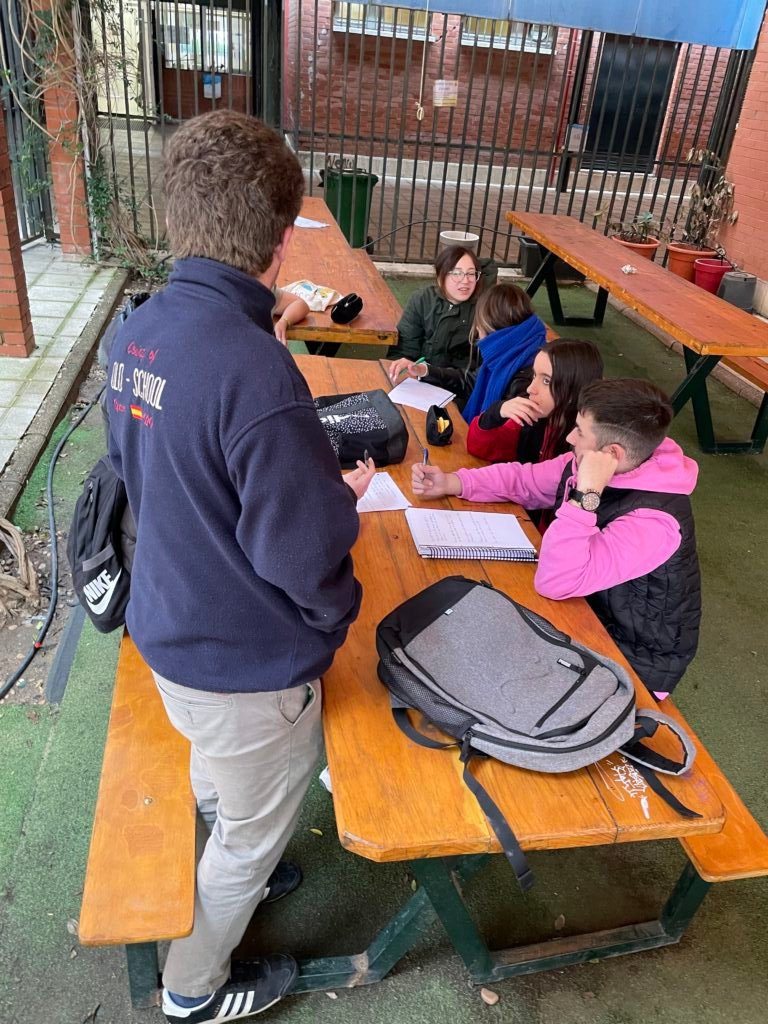
En este podcast, dos alumnas Alejandra Carrasco Montero, Andrea Vázquez Gómez de 2º Bachillerato y como parte de la materia Imagen y Sonido, realizan una encuesta a la comunidad educativa de nuestro centro sobre la opinión que le damos a lo que piensen de nosotros.
Agradecemos la participación a todos los profesores, alumnos y trabajadores del centro que se han prestado a dar su testimonio.
Es un tema tan interesante que no os lo podéis perder.

Marco García, alumno de 1º de Bachillerato nos habla en profundidad de este tipo de «dieta» cada vez más de moda en la actualidad.
Con una entrevista a una persona que lo practica para que nos cuente su experiencia.

Javier Falero, Raúl Fernández y Jorge Romero realizan este excelente podcast que incluye una búsqueda para aclarar los conceptos más importantes y entrevistas a diferentes personas para analizar la relación entre estos tres ámbitos de la vida.

Para esta actividad los alumnos escogieron frases tanto del libro de texto como propias y de escritores famosos para definir qué significan los idiomas y su importancia . Después escribieron textos sobre su idioma preferido, el portugués y por qué para ellos es importante. El día 5 de mayo, día mundial de la lengua portuguesa grabaron estos textos para celebrarlo.

El alumnado de 1º D de ESO con su profe de Música están elaborando microrrelatos, escribiendo el guion de su historia, eligiendo una banda sonora adecuada a las escenas de la misma, realizando la grabación del podcast y diseñando su propia portada. Aquí os traemos el primero, esperamos que os guste.